Regional to LCC Major: When to Make the Jump
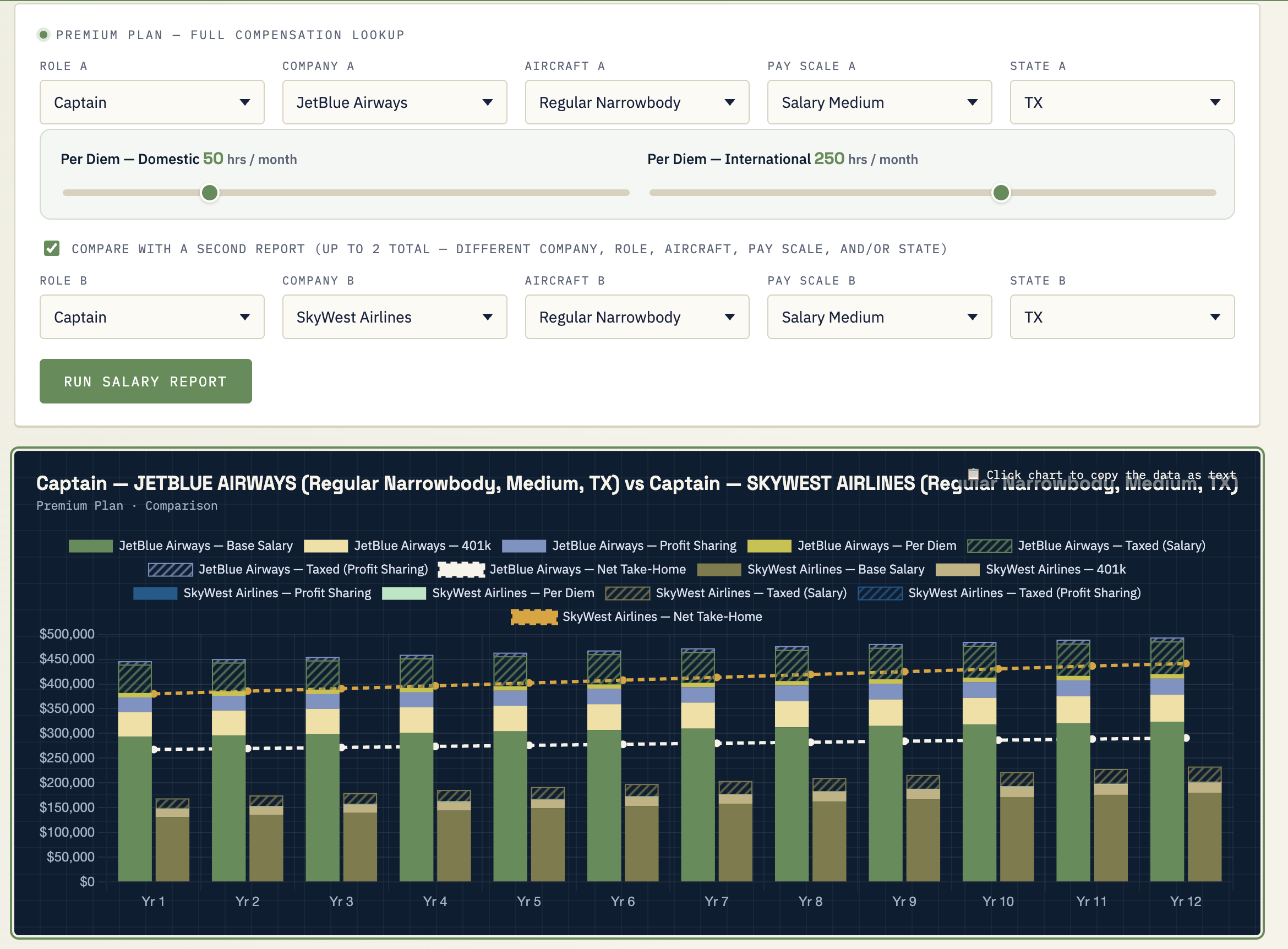
A SkyWest year 12 captain earns $172,031 annually. A JetBlue year 1 captain earns $315,953. Taking the regional captain job costs you $143,922 per year - or $2.16 million over 15 years. Most regional captains don't do the math. Here's when jumping to an LCC major makes sense.
You face a massive psychological trap when you upgrade to the left seat at a regional airline. You finally hold a schedule you like. You fly with first officers who respect your experience. You earn a paycheck that feels substantial after years of poverty-level flight instruction. Earning $172,031 at SkyWest feels like you made it.
You haven't.
Every single month you sit in the left seat of that regional jet, you bleed generational wealth. The aviation market fractured heavily after the 2023 contract cycles. Low-cost carriers (LCCs) and national majors established pay scales that completely dwarf the regional sector. We pulled the raw, tax-adjusted data to expose the true cost of complacency.
This decision framework destroys the myths about regional airline longevity. We will break down the exact dollar amounts you lose, expose the hidden retirement costs, and show you exactly when you need to submit your applications to the major LCCs.
The Real Pay Gap
The financial difference between a top-tier regional airline and a major LCC shocks most aviators. You can't compare them on an hourly basis. You must look at total compensation—which includes your net base salary, 401k company contributions, profit sharing, and untaxed per diem.
Let's look at the hard data for a pilot residing in a tax-free state like Texas.
A Year 12 Captain at SkyWest reaches the absolute zenith of the regional pay scale. They take home $149,121 in net base pay, receive $21,560 in 401k deposits, and generate roughly $1,350 in per diem. Their total annual package equals $172,031.
Now look at JetBlue. A Year 1 Captain at JetBlue Airways earns a staggering total package of $315,953. Alaska Airlines operates in the exact same tier. A Year 1 Captain at Alaska Airlines earns $295,304. By Year 5, that Alaska Captain sees their total package scale to $302,821.
The annual difference between staying at SkyWest and jumping to JetBlue equals $143,922.
You must project this gap over the rest of your career. If you sit at a regional airline for 15 years rather than transitioning to an LCC major, you forfeit $2,158,830. That calculation doesn't even account for the massive compound interest you lose by missing out on the $50,000+ annual 401k deposits provided by JetBlue and Alaska.
You can run your own custom scenarios to see the brutal reality of this gap in our JetBlue Airways vs SkyWest Airlines Pilot Pay tool. You will quickly realize that the regional airlines exist strictly to build your turbine time. They can't fund your retirement.
When to Jump
You make the jump the second a major LCC offers you a class date.
Pilots constantly debate whether they should stay at a regional to build 1,000 hours of Pilot-in-Command (PIC) time before applying to a major. Ten years ago, that strategy made sense. Today, it costs you hundreds of thousands of dollars. Seniority dictates everything in aviation. It dictates your pay scale, your schedule, your base assignment, and your vacation time.
If you delay your transition by one year to get your PIC time, you forfeit an entire year of LCC major seniority. You delay your upgrade to the left seat of an Airbus A320 or a Boeing 737. You miss out on a year of 15% to 16% direct 401k contributions.
Your optimal timing indicator triggers the moment you meet the unrestricted ATP requirements and log enough Part 121 time to make your resume competitive. Major LCCs like JetBlue and Alaska hire aggressive, sharp regional first officers constantly. If you want to see how these two destination carriers fight for talent, study our Alaska Airlines vs JetBlue Airways Pilot Pay analysis.
If you prefer the massive domestic point-to-point network, you should cross-shop the market using our JetBlue Airways vs Southwest Airlines Pilot Pay breakdown. The math remains the same across the board. You transition at the earliest possible opportunity. You grab your seniority number and you never look back. Read our Best Regional Airlines and LCCs for Pilots article for a deeper look at the LCC landscape.
When to Stay Regional
The math screams at you to leave, but life sometimes ignores the math. You might encounter a few rare scenarios where staying at a regional airline makes sense.
Family and geography override W-2 cash for a small subset of pilots. If you live in a SkyWest base like Fresno, California, or Colorado Springs, you enjoy an incredible quality of life. You drive to work. You sleep in your own bed before your trips. If transitioning to JetBlue forces you to commute across the country to New York (JFK) or Boston (BOS), the commute will destroy your mental health.
You must calculate the physical toll of sitting in jumpseats on your days off. A $143,000 raise loses its appeal when you miss your kid's baseball games because you got bumped from a commuter flight. If you fly for a wholly-owned regional, map out the exact geographical consequences of a transition in our Envoy Air vs JetBlue Airways Pilot Pay comparison.
Age acts as the final anchor. The FAA mandates retirement at age 65. If you are a 62-year-old regional captain, transitioning to a major LCC forces you back to the bottom of the seniority list. You will spend your final three years on reserve, flying weekends and holidays, making First Officer pay. If your career clock is expiring, riding out your final years in the comfortable left seat of a regional jet makes perfect sense.
The Application Strategy
You must treat your major airline application like a second job. You don't just throw a resume into a portal and wait for the phone to ring.
Start building your application the day you finish initial training at your regional airline. Update your logbook digitally every single week. Major LCCs scrutinize your flight time breakdowns. They want to see consistent, safe flying. Volunteer for committees at your regional carrier. Become a simulator instructor or a line check airman if the opportunity arises. The major carriers buy your leadership potential, not just your stick-and-rudder skills.
You need to target the airlines that match your specific goals. Don't blanket the industry without a plan. If you want to fly widebody international routes eventually, you must look beyond the LCCs. Compare the LCC progression against the legacy giants in our American Airlines vs JetBlue Airways Pilot Pay and Delta Air Lines vs JetBlue Airways Pilot Pay tools. See how the massive 401k matches stack up in the JetBlue Airways vs United Airlines Pilot Pay breakdown.
If you value schedule predictability and heavy metal over passenger interaction, you must explore the cargo sector. Cross-reference your LCC strategy with the heavy freight operators using our FedEx Express vs JetBlue Airways Pilot Pay and JetBlue Airways vs UPS Airlines Pilot Pay guides.
Lock down your interview prep months in advance. Pay for professional logbook reviews. The $143,922 annual pay gap means every month you delay a successful interview costs you nearly $12,000 in lost wages. Treat the preparation process with the financial respect it deserves.
FAQ Section
What is a realistic hiring timeline for a major LCC? Timelines fluctuate based on industry attrition and aircraft deliveries. In a healthy market, a competitive regional First Officer with 1,500 to 2,000 hours of Part 121 time can secure an interview within six to twelve months of active networking and application updates.
Should I stay at my regional to get my captain upgrade first? No. You accept a class date at a major LCC the moment they offer it. Delaying your transition to chase a regional captain upgrade costs you critical seniority at your destination airline. Seniority controls your entire quality of life.
What specific experience do the major LCCs want? They demand a clean training record, zero FAA violations, and consistent Part 121 turbine experience. While Turbine PIC time used to be mandatory, carriers like JetBlue and Alaska now routinely hire experienced regional First Officers who demonstrate strong CRM skills and professional maturity.
The Bottom Line
Comfort kills your career. A $172,031 salary at SkyWest tricks you into thinking you reached the finish line. The brutal, unforgiving math of the 2026 aviation market proves otherwise.
JetBlue and Alaska offer you an immediate path to $300,000+ total compensation packages, massive 401k deposits, and profit-sharing checks that regional airlines simply can't match. You leave $2.16 million on the table if you stagnate in the left seat of a regional jet for 15 years. You must treat your regional airline exactly as it treats you: as a temporary capacity provider.
Stop leaving generational wealth on the table. Start planning your exit strategy today. Dive into our complete Career Bundle to access advanced interview prep and run your exact career numbers through the skylevels.fyi comparison tool. Your seniority number is waiting.