The Pilot Layover Life: What Airlines Actually Pay for Hotel Costs
Per diem covers meals but not hotels. Airlines pay for hotels separately but the quality varies dramatically. UPS pilots get the highest per diem at $11,490 annually. FedEx pilots get $8,940. Here's how per diem actually works and what airlines pay for beyond it.
You see the Instagram photos of pilots lounging by resort pools in Rome or eating sushi in Tokyo. The reality of a pilot layover looks vastly different. When you fly heavy metal across the globe, you spend half your life sleeping in foreign beds. You don't pay for those beds, but the airline doesn't hand you a blank check either.
Pilots operate under rigid union contracts that dictate exactly where they sleep, what they eat, and how much cash they receive for the inconvenience of leaving their families. If you think layover compensation consists of an airline tossing you a company credit card, you misunderstand the entire system.
We pulled the exact data to show you the true financial footprint of a pilot's life on the road. We break down exactly what per diem covers, how unions fight brutal battles over hotel contracts, and show you the precise untaxed cash yields at the major carriers.
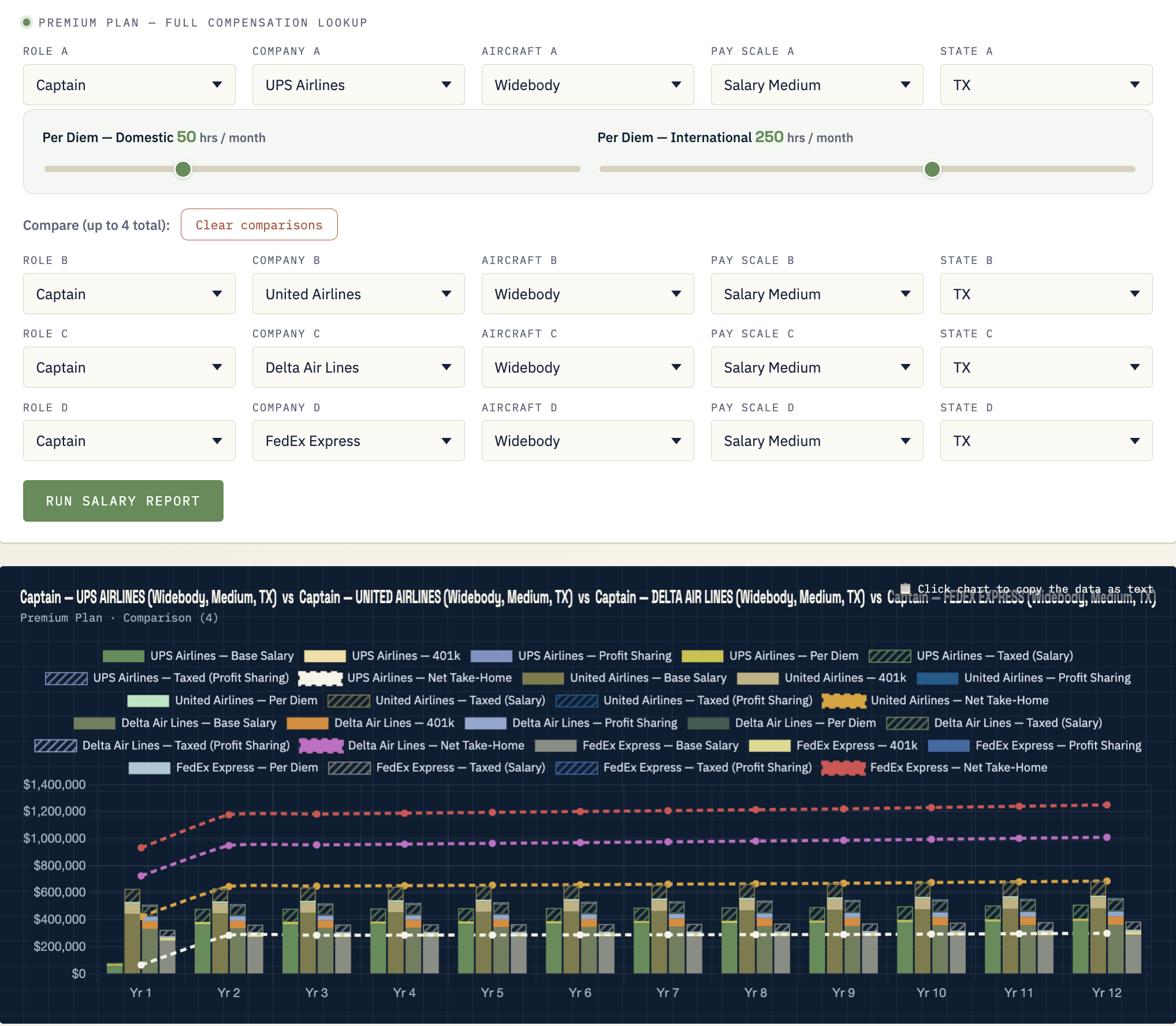
Map Your Trajectory: Stop guessing about your total compensation. Model your exact career timeline using the skylevels.fyi comparison tools to see how your per diem stacks up against the broader market.
What Per Diem Actually Covers
Per diem acts as a silent wealth multiplier. The IRS allows airlines to pay you a specific hourly rate for every single hour you spend away from your base. The clock starts ticking the moment you report for duty at your home airport. It stops ticking 15 to 30 minutes after you block in at the end of your final trip.
This money exists strictly to cover your meals and incidental expenses on the road. It doesn't cover your hotel room.
Airlines usually pay different rates for domestic versus international flying. You might earn $2.50 per hour while flying to Chicago, but earn $3.00 per hour while flying to London. Because you spend hundreds of hours away from base every month, this hourly trickle turns into a massive flood of untaxed cash by the end of the year.
You receive this money completely tax-free. When you see a $10,000 per diem yield on your pay stub, you keep every single penny. To match that spending power with your regular W-2 base salary, you'd need to earn roughly $14,000 before taxes.
Smart pilots don't blow their per diem on overpriced airport steak dinners. You pack your meals in a cooler. You meal-prep at home. You pocket the untaxed cash and funnel it directly into your personal investment accounts. You literally build your wealth by eating leftovers at cruising altitude.
Hotel Contracts by Airline
You never pull out your personal credit card to pay for a layover hotel room. Your airline maintains a master billing account with hotel chains across the globe. You show up to the front desk, show your crew badge, take your key, and go to sleep.
But the quality of that hotel room sparks vicious battles between airline management and pilot unions.
Unions like the Air Line Pilots Association (ALPA) and the Allied Pilots Association (APA) maintain dedicated Hotel Committees. These pilots inspect potential layover properties and enforce strict contractual requirements. The airline can't simply stick you in a cheap motel next to the highway to save a few bucks.
The union contract dictates specific rules based on the length of your layover. If you have a "short layover" (typically under 14 hours), the contract requires the airline to book an airport hotel. You need to maximize your sleep, so avoiding a long transit ride into the city center remains the priority.
If you hold a "long layover" (over 14 hours or over 24 hours depending on the carrier), the contract mandates a downtown or resort-style hotel. You need access to restaurants, grocery stores, and gyms.
The union enforces granular details. Hotels must provide blackout curtains to accommodate pilots sleeping during the day. Rooms must sit on higher floors away from ice machines, elevators, and street noise. The hotel must feature a 24-hour restaurant or provide dedicated crew meals if you arrive at 2:00 AM. When a hotel violates these rules, the union yanks them from the approved list and forces the airline to find a new property.
Per Diem Comparison by Carrier
Let's look at the exact untaxed cash hitting your bank account. The amount of per diem you generate depends entirely on how your airline builds your schedule. Cargo operators often generate higher per diem because they sit on multi-day global layovers waiting for freight.
Here's the exact annual per diem generated by a Year 12 Widebody Captain at the major carriers:
| Airline | Annual Per Diem (Untaxed) |
|---|---|
| UPS Airlines | $11,490 |
| United Airlines | $10,020 |
| Delta Air Lines | $9,630 |
| FedEx Express | $8,940 |
| American Airlines | $8,100 |
UPS takes the crown in this specific data set. A senior UPS widebody captain pulls down $11,490 in pure, untaxed cash every single year. You can review exactly how this fits into their massive overall wealth package in our UPS Pilot Pay 2026 guide.
United and Delta hover near the $10,000 mark. You see the heavy international footprints of these carriers driving long layovers and high hourly generation. Dive into the exact mechanics of these passenger networks by reading the United Pilot Pay 2026 and Complete Guide to Delta Air Lines Pilot Pay in 2026 analyses.
FedEx generates $8,940, heavily influenced by their rapid night-sort schedules that return pilots to base quickly during domestic operations. American Airlines sits at $8,100, reflecting specific lower-utilization widebody models within their network. Check the FedEx Pilot Pay 2026 breakdown to see how their pension completely offsets the slightly lower per diem yield.
Layover Reality Check
You need to shatter the glamour myth. A layover isn't a vacation. It's a federally mandated rest period designed to keep you from crashing an airplane.
When you land a Boeing 777 in Tokyo after a 14-hour flight, you don't immediately hit the local bars. You fight brutal jet lag. You arrive at the hotel exhausted. You close the blackout curtains, crank the air conditioning down to 65 degrees, and force your body to sleep while the sun shines outside.
If you fly for a cargo carrier like UPS or FedEx, your reality looks even harsher. You fly on the backside of the clock. You land in Anchorage at 4:00 AM, sleep through the afternoon, wake up in the dark, and go back to the airport to fly to Asia.
You spend your layovers recovering. You work out in the hotel gym, eat your packed meals, video chat with your family, and prepare for the next leg. The 30-hour layovers in Rome look great in photographs, but you earn those rare gems by suffering through countless 12-hour minimum-rest layovers in Newark. Read our Regional vs Major Airline Decision guide to see how your seniority dictates the quality of these layovers.
Financial Planning Around Per Diem
Treat your per diem like an investment vehicle. Don't treat it like a slush fund.
A $10,000 untaxed per diem yield covers the maximum annual contribution to a Roth IRA, with thousands left over to fund a standard brokerage account. When you combine this discipline with the massive 16% to 17% 401k deposits provided by the legacy carriers, your net worth explodes.
You control your road expenses. Every time you skip the $40 hotel room service burger and eat a $5 meal-prepped chicken and rice bowl, you pay your future self.
Stop viewing per diem as an afterthought. It represents a critical pillar of your total compensation package. Run your exact career numbers through the interactive skylevels.fyi comparison tools today to see exactly how much untaxed cash waits for you on the line.