How Pilot Contracts Actually Get Negotiated: The Real Process
Delta's 2023 contract took 4 years to negotiate. United's 2024 contract required a strike authorization vote. American's ratification faced pushback from senior captains. Here's how pilot contracts actually get done and why the process matters for your career.
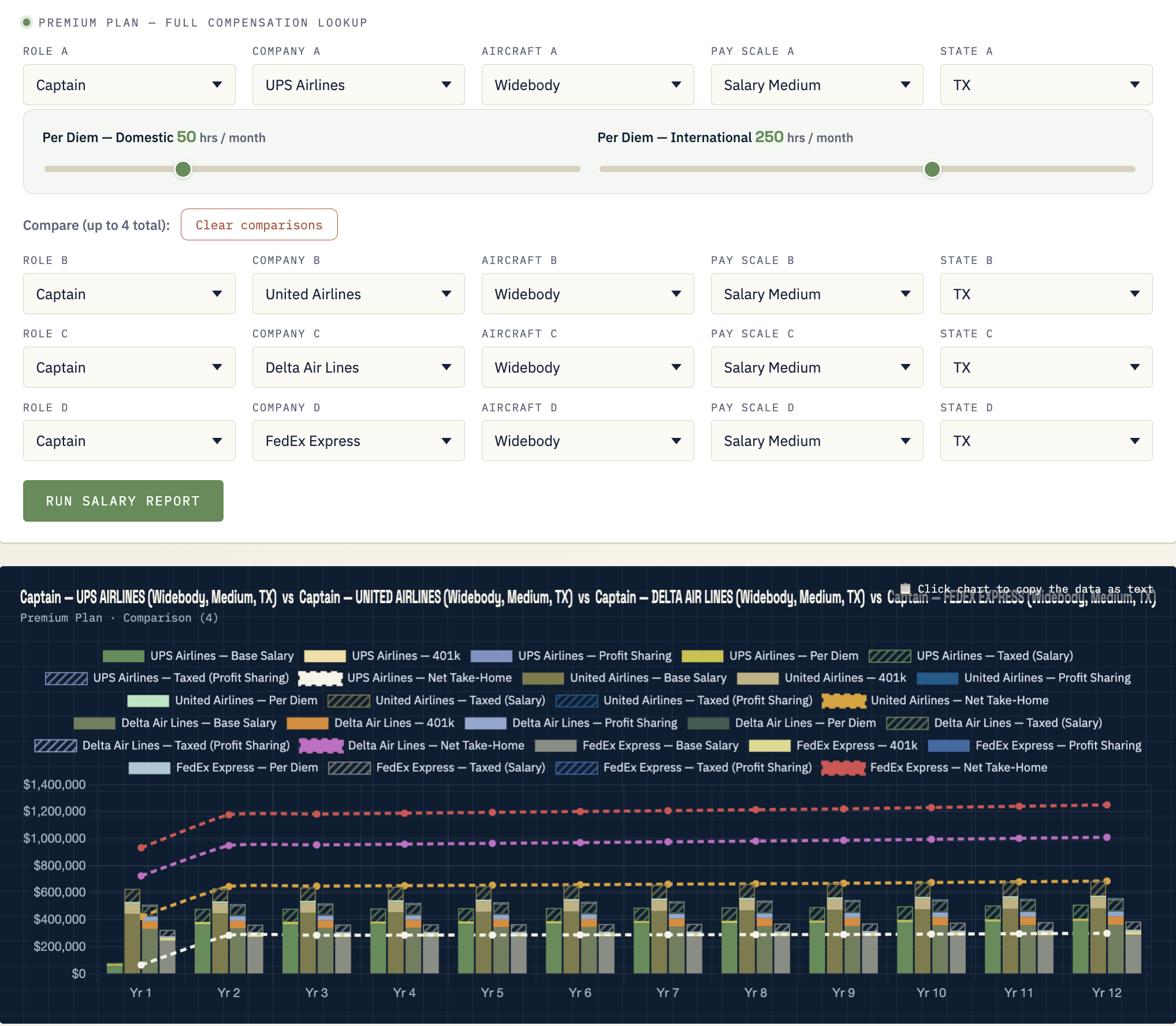
When you accept a class date, you don't sign a personal salary agreement. You inherit a collective bargaining agreement that dictates your exact financial trajectory for the rest of your life. The contract dictates that a Year 12 Widebody Captain at Delta takes home exactly $285,280 in net base pay. You can't negotiate a single penny of that yourself.
You rely entirely on your union leadership to secure your wealth. Most pilots misunderstand this process. They assume contracts expire like apartment leases. They think unions can strike the second negotiations break down. They fail to understand the massive, grinding bureaucratic machine that controls aviation labor.
Airlines operate under the Railway Labor Act (RLA). This federal law makes striking nearly impossible. It forces unions and airline management into endless rounds of mediation designed to protect the national economy from transportation shutdowns. Understanding this process gives you a distinct advantage. You stop panicking when negotiations stall and start planning your finances around realistic timelines. We break down exactly how unions extract massive wealth from airline management, explain the differences between the major labor groups, and show you the exact numbers they fought for during the historic 2023-2026 contract cycles.
The Negotiation Timeline
Under the RLA, airline contracts never actually expire. They become "amendable." This subtle legal distinction changes everything.
If a contract becomes amendable on December 31, the old rules remain fully in force on January 1. You keep flying. You keep receiving your exact current pay. Management keeps operating the airline. This prevents sudden wildcat strikes that would paralyze the global supply chain.
The process begins when the union serves a "Section 6 notice" to management, usually several months before the amendable date. This triggers direct negotiations. Management and union committees sit in conference rooms and trade proposals. They argue over hourly rates, 401k contributions, and hotel layover rules.
Direct negotiations often drag on for years. Airlines stall deliberately. They know every month they delay a new contract saves them hundreds of millions of dollars in payroll. When direct negotiations inevitably break down, either side can request assistance from the National Mediation Board (NMB).
The NMB takes control of the timeline. They force both sides to keep talking. If the mediator decides the parties hit an absolute deadlock, they can "release" them. This release triggers a 30-day cooling-off period. Only after those 30 days expire can the union legally strike, or the company lock out the pilots.
Unions weaponize the threat of a strike to force management's hand. They hold "Strike Authorization Votes." These votes carry massive psychological weight. When 99% of pilots vote to authorize a strike, Wall Street panics. Investors dump the airline's stock. Management suddenly finds the cash to fund the union's demands. You saw this exact scenario play out perfectly at Delta, United, and American. The mere threat of a legal strike under the RLA forced the legacy carriers to hand over cumulative pay raises approaching 40%.
ALPA vs APA vs SWAPA vs IPA Structures
Not all unions operate the same way. The letters on your union pin dictate their negotiating strategy.
The Air Line Pilots Association (ALPA) represents the vast majority of the industry, including pilots at Delta, United, FedEx, and Hawaiian. ALPA functions as a massive national umbrella. They utilize "pattern bargaining." When the Delta ALPA Master Executive Council (MEC) secured their landmark contract, United ALPA immediately demanded the exact same rates. ALPA uses the strength of one pilot group to pull up the rest. Check our United Pilot Pay 2026 and Complete Guide to Delta Air Lines Pilot Pay in 2026 guides to see how perfectly these ALPA contracts mirror each other.
The Allied Pilots Association (APA) represents American Airlines. They broke away from ALPA decades ago. The APA acts as a fiercely independent union. They don't care about pattern bargaining; they care about American Airlines pilots. The APA negotiated massive "snap-up" provisions to ensure their pilots matched ALPA's victories. You can see this independent streak reflected in their wealth structure. Compare them against ALPA carriers using the American Airlines vs Southwest Airlines Pilot Pay tool.
The Southwest Airlines Pilots Association (SWAPA) operates specifically for Southwest pilots. SWAPA negotiated the highly unique Trips for Pay (TFP) system that completely ignores standard hourly block rates. They prioritize narrowbody efficiency. You can track exactly how well SWAPA defended their 737 pilots against the widebody legacy giants by using the Delta Air Lines vs Southwest Airlines Pilot Pay and Southwest Airlines vs United Airlines Pilot Pay comparison models. If you want to see how Southwest stands against other carriers, look at the Alaska Airlines vs Southwest Airlines Pilot Pay metrics.
Finally, the Independent Pilots Association (IPA) represents UPS. They focus relentlessly on massive base salaries rather than the heavy 401k matches ALPA favors. Compare their unique approach against ALPA cargo giants via Southwest Airlines vs UPS Airlines Pilot Pay. Every union structure alters the final W-2 you receive.
What Gets Negotiated
Pilots obsess over the hourly rate. The negotiating committee obsesses over everything else.
Your contract covers hundreds of pages of dense legal text. They negotiate the exact percentage of your 401k direct contribution. When Delta ALPA pushed their 401k contribution to 16%, it forced the entire industry to respond. A Year 12 Widebody Captain at Delta now receives a staggering $61,676 in direct 401k deposits every single year.
They negotiate profit-sharing formulas. The union fights to lower the corporate margin threshold required to trigger a payout. That specific contract language results in a Year 12 Delta Captain netting a $26,940 profit-sharing check on top of their massive base pay.
They fight viciously over scheduling rules. They negotiate the minimum hours you get paid if a flight cancels. They mandate exactly what quality of hotel you sleep in on a layover. They establish the per diem rate. For a Delta Widebody Captain, that negotiated per diem rate yields $11,610 in untaxed cash annually.
If you fly for a regional airline, your union negotiates flow-through agreements to the mainline partners. Run your numbers through the Envoy Air vs Southwest Airlines Pilot Pay tool to see how regional contracts cap your wealth. You rely on your union to build the bridge out of the regional sector.
The Ratification Vote Process
Negotiators don't sign the final contract. You do.
When the union and management finally agree on terms, they create a Tentative Agreement (TA). The union leadership reviews the TA. If they approve it, they send it to the entire pilot group for a ratification vote.
This triggers the "Roadshow" phase. Union leaders fly around the country holding massive meetings at pilot bases. They present the spreadsheets. They explain the compromises. They try to convince thousands of angry, exhausted pilots that this TA represents the best possible deal.
Pilots tear the TA apart. Senior captains complain about the retro-pay calculations. Junior first officers complain about the reserve rules. Check the massive leap in Delta First Year Pilot Pay to see exactly what those junior pilots fight for. Then, the pilot group votes.
If 50.1% vote yes, you get a new contract. If they vote no, the TA dies. The union negotiators walk back into the room with management, point to the failed vote, and demand more money. A failed TA sends a brutal message to Wall Street that the pilot group refuses to settle.
Recent Contract Wins Analyzed
The 2023-2026 cycle rewrote the aviation wealth hierarchy.
Let's look at the hard data for a Texas resident. A Year 12 Widebody Captain at Delta takes home a net base salary of $285,280. When you add their $61,676 401k and $26,940 profit-sharing check, their wealth footprint dominates the US market. The ALPA negotiating committee extracted maximum cash flow from the most profitable airline in America.
Now look at the cargo sector. FedEx ALPA fought a brutal five-year battle to secure their latest deal. A Year 12 Widebody Captain at FedEx takes home $199,780 in net base pay and receives $22,378 in 401k deposits. Their total package falls significantly short of the passenger legacy giants. You can analyze this direct rivalry using our FedEx Express vs Southwest Airlines Pilot Pay tools.
Read the FedEx Pilot Pay 2026 and UPS Pilot Pay 2026 guides to see how cargo unions prioritized different retirement structures over raw W-2 cash. Every dollar in those models represents a massive fight at the bargaining table.
What Comes Next in 2026-2028
The contracts signed in 2023 and 2024 will become amendable before the end of the decade. Unions already started preparing their next round of Section 6 notices. The next cycle will likely ignore raw hourly rates and attack quality of life. Pilots want more days off, stronger fatigue protections, and tighter scheduling rules. You need to position your career to take advantage of these upcoming battles. Study the foreign and corporate models in our Emirates Pilot Pay 2026, Hawaiian Airlines Pilot Pay 2026, and NetJets vs Airline Pilot Career guides. See exactly how delaying your major transition hurts you in the Regional vs Major Airline Decision breakdown. The global pilot shortage gives labor the ultimate leverage. Don't settle for less.